
Fraud affects men and women equally – but women pay a higher price
Research from Enfuce finds that women are more likely to suffer anxiety, cut essentials and lose financial confidence after fraud
London, 5 March, 2026: Financial fraud may appear gender-neutral, but its consequences are not. New research from Europe’s card issuing and processing powerhouse Enfuce reveals that despite similar rates of financial fraud, women suffer greater lasting emotional and financial damage.
Research by The Fawcett Society finds that women are more likely to manage household budgets and cover essential costs, while ONS data shows women in full time roles continue to earn on average 6.9% less than men. These factors — lower average earnings and greater day-to-day financial responsibility — help explain why the impact of fraud can be more severe for women.
Key findings:
- Equal exposure: Men and women suffer from financial fraud at around the same rate (3 in 5), with minor differences in the types of scam they fall victim to.
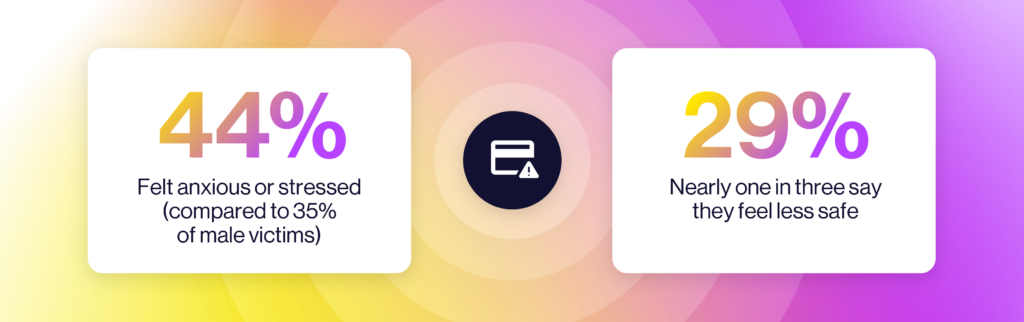
- Unequal impact: Despite this, more women suffer from the ongoing effects of fraud – stress and anxiety (44%), feeling less safe (29%), and damaged financial confidence (12%).
- Greater consequences: Many women (2 in 5) report that they had to cut back on spending or struggled to pay bills. Younger women in particular fear that their long-term financial decisions have been affected.
Equal exposure
The research found that three in every five UK adults have experienced financial fraud. Women are more likely to fall victim to online shopping scams and card compromise attacks. Men, however, fall prey to email phishing attacks and investment and crypto scams at a greater rate. While less common, men and women are equally vulnerable to romance scams.
Unequal impact
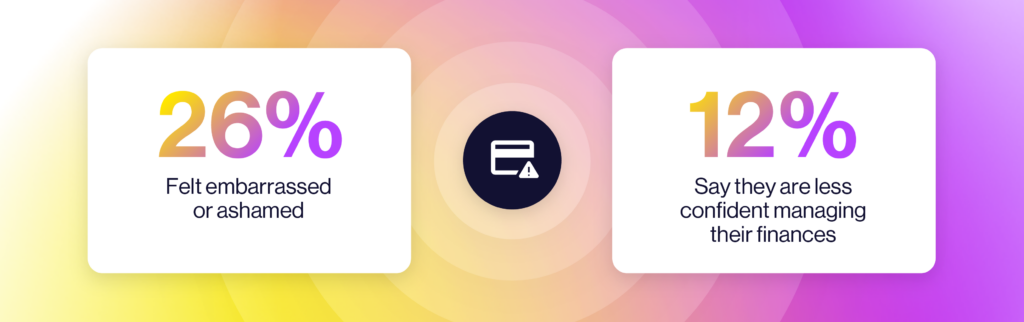
The real difference lies in what happens after the fraud. Women are more likely than men to feel the emotional impact after the incident itself. Nearly half (44%) of women suffered ongoing stress and anxiety, compared with 35% of men. One in three (29%) said they felt less safe as a result of fraud, and a quarter (26%) reported embarrassment and shame. Women were also more likely to say their confidence in managing money has been damaged (12%).
The impact extends beyond emotional distress and affects day-to-day finances in very real ways. Among women who experienced fraud, 25% said they were forced to cut back on essential spending, 21% struggled to pay bills, and 14% said their ability to support dependents was affected.
Greater consequences
A quarter of women (28%) also changed how they made payments as a result of fraud. In their everyday financial transactions, more than half (54%) see cash as the most trusted payment method, compared to only a third trusting card-based payments (33%).
The effect is more pronounced in younger women, who also suffer greater levels of fraud. Over two-thirds (68%) of women aged 18-34 reported being victims of financial fraud, and four in five (81%) of these reported at least one ongoing psychological effect such as anxiety or loss of sleep. A quarter (25%) said the fraud was likely to affect future financial decisions, such as loan or mortgage applications.
Perceived gaps in fraud prevention
The findings also highlight women’s concerns about current fraud prevention efforts. Of female fraud victims, two-thirds (64%) believe financial institutions are not doing enough to prevent fraud, while 75% say there isn’t enough education to help people understand the risks. 61% find current guidance too complicated, and 74% feel there isn’t enough support for vulnerable people who experience fraud.
These results suggest that many women do not feel fully protected, highlighting the need for clearer guidance, better education and stronger support when fraud happens.
Denise Johansson, Co-Founder & Co-CEO, Enfuce said: “Equal risk does not mean equal impact. If fraud leaves women feeling less confident in the financial system, then we are not closing the gender gap, we are reinforcing it. Financial institutions have a responsibility to go beyond compliance and treat fraud prevention as a core part of safeguarding financial inclusion and equality.”
Download the full report, The true cost of financial crime: The lasting impact of fraud on women’s financial security here.
Methodology
Enfuce engaged independent research agency Sapio to survey 2000 consumers from across the UK. Interviews were conducted in February 2026.
About Enfuce
Born in the Nordics and built for the world, Enfuce is the strategic issuer-processor and licensing partner for top-tier brands, banks, fintech leaders and ecosystem partners.
Enfuce designs, launches and runs payment programmes that scale globally with confidence, backed by enterprise-grade resilience and regulatory strength.With compliance, security and fraud intelligence embedded from day one, Enfuce enables ambitious programmes to expand internationally and operate safely at scale.
Holding Electronic Money Institution (EMI) licences from the Finnish Financial Supervisory Authority and the UK’s Financial Conduct Authority, Enfuce supports debit, credit, prepaid and commercial card programmes across Europe, the UK and beyond.
Enfuce has raised €73.5 million in funding to support global expansion and platform innovation. Recognised by Visa and Mastercard innovation programmes and the recipient of leading global industry awards, Enfuce continues to scale internationally as a trusted partner for high-performance payment programmes.