Digital wallet payment processing: A guide for card issuers
For payment card issuers, digital wallet support has grown to be a baseline customer expectation that directly affects card usage, customer retention, and the overall appeal of your product. But meeting that expectation isn’t as straightforward as it sounds.
Enabling and processing digital wallet payments means:
- Coordinating with card schemes
- Integrating with tokenisation services
- Meeting the technical requirements of each wallet provider
- Staying on top of the compliance obligations that come with it
Done in-house, it’s a significant undertaking that can result in stretched timelines that slow down launches, strained internal resources, and ongoing maintenance across multiple partners. If you can’t manage this complexity, you risk creating friction in the customer experience.
Getting it right depends on having the right setup or the right partner. A card issuing and processing platform with digital wallet capabilities already built in can take the heavy lifting off issuers.
In this guide, we’ll walk you through how digital wallet payments work, what’s involved in enabling and processing them, and what businesses need to think about as they approach them.
Table of contents:
- What is a digital wallet?
- How digital wallets work for card payments
- Why digital wallets matter: Benefits for issuers and their cardholders
- What you need to enable and process digital wallet payments as a card issuer
- How to get started with digital wallet payment processing
- How enabling three digital wallets drove 30% customer growth for a Nordic neobank
- FAQs on digital wallet payment processing
Want to implement digital wallets for your card programme? Contact us to find out how Enfuce makes it easy.
What is a digital wallet?
A digital wallet is an application that stores payment methods and other credentials like an ID, a loyalty card, or a boarding pass. It works much like the real wallet in your customer’s pocket, but with a digital wallet, customers no longer need the physical items themselves to complete activities.
When it comes to payments specifically, there are a few distinctions between digital wallets:
1. Whether the digital wallet stores cards or holds money. Some digital wallets are essentially containers for existing payment methods. Apple Pay, for example, stores a virtual version of a payment card and uses it to make payments. Others, like PayPal, can also hold an actual balance, making them function like a payment account that customers access through an app.
2. How widely a digital wallet can be used.
- Closed wallets – like Amazon Pay or Walmart Pay – only work within a single retailer or small network of brands.
- Open wallets work across any merchant that accepts them. Most open wallets are also mobile wallets – like Apple Pay, Google Pay, and Samsung Pay – that are tied to a mobile device or operating system, such as Apple iOS or Android.
- Hybrid wallets such as Venmo, PayPal, and WeChat Pay, sit somewhere in between, combining closed and open wallet features (including QR code-based payments) with peer-to-peer transfers between users on the same platform.
For card issuers, the most important types of digital wallets to support are open mobile wallets as these are the wallets cardholders most commonly use and expect their cards to work with.
How digital wallets work for card payments
Paying with a card through a digital wallet isn’t all that different from a standard card payment. The flow is largely the same, with a few extra steps. Here’s how the process works:
- The cardholder adds their card to a digital wallet: They do this either by adding the card details directly into the wallet app or by initiating the process through the card issuer’s own app, which securely transfers the required provisioning information automatically.
- The card is tokenised: To reduce the risk of exposing sensitive card data, the card details are securely sent to a token service provider (TSP), typically a card scheme service such as Visa Token Service (VTS) or Mastercard Digital Enablement Service (MDES), during wallet enrolment. The provider replaces the card’s primary account number (PAN) with a unique token, specific to the device and wallet.
- The cardholder pays using the wallet: Once set up, the cardholder can use their digital wallet for payments in-store, in-app, and online. In-store contactless payments typically rely on near field communication (NFC) technology, which allows the mobile device and payment terminal to communicate securely at the point-of-sale. Digital wallets can also speed up online payments and in-person checkouts by reducing the need to manually enter payment information.
- The transaction uses the token: A digital wallet payment is processed much like a standard card transaction, but the transaction uses a payment token instead of the original card number. The token is linked to the underlying card, allowing the transaction to be routed and processed without exposing the original PAN to the merchant.
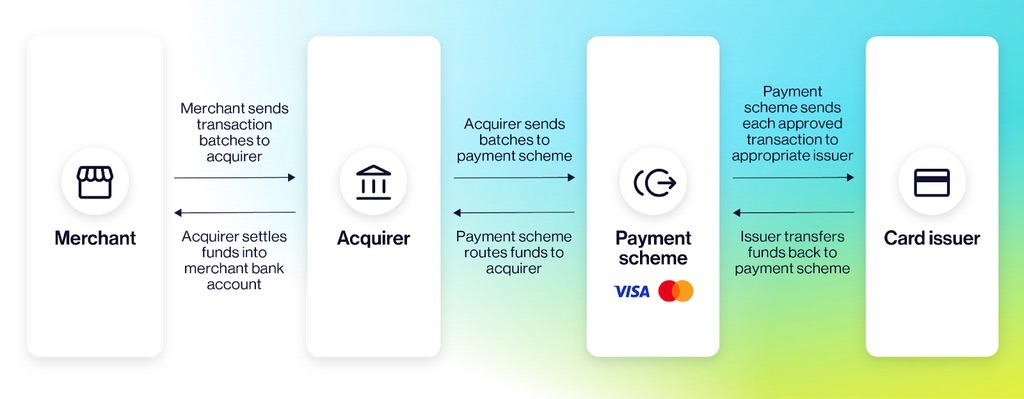
- The transaction is authorised: The transaction is sent through the card payment network for authorisation. The card scheme uses the token information to identify the underlying card account and routes the transaction to the appropriate issuer or processor. The transaction is then evaluated using the normal authorisation checks, such as card status, available funds or credit, and fraud controls. Based on the outcome of these checks, the transaction is approved or declined. Approved transactions are later cleared and settled through the card scheme.
Why digital wallets matter: Benefits for cardholders and issuers
Cardholders have embraced digital wallets, whether enabled for prepaid card, debit card, or credit card products, with payment volumes growing steadily. In the top 10 European markets, card-based wallets have been growing at a compound annual rate of 36% between 2020 and 2026 and now account for 14% of all e-commerce payments – the fastest-growing payment method in the region.
Here’s what digital wallets bring to the table:
For cardholders: A faster, safer way to pay
With smartphones and smartwatches becoming central to daily life, customers now expect to be able to make mobile payments with their devices. Digital wallets deliver on that with quick transactions that don’t require a physical card.
Security is a significant part of the appeal, too. Tokenisation ensures merchants never receive the actual card details during a transaction. Cardholders’ information stays protected even if something goes wrong on the merchant’s end. Add biometric authentication, such as facial recognition or fingerprint security, and digital wallets become a more convenient and secure experience than a physical card.
For issuers: Engagement, relevance, and growth
For issuers, supporting digital wallets can directly increase card usage and customer retention. When cardholders can add a payment card to their preferred wallet, they’re more likely to use it for everyday spending, helping issuers grow payment volume and strengthen customer engagement.
Also, support for popular digital wallets like Apple Pay, Google Pay, and Samsung Pay is fast becoming a baseline expectation rather than a differentiator, making it an important part of staying competitive in many markets.
What you need to enable and process digital wallet payments as a card issuer
Getting digital wallet payments up and running involves technical requirements and operational processes, as well as ongoing compliance responsibilities once you’re live. Here’s what to plan for:
- Integration with the card scheme’s tokenisation service: For Visa and Mastercard cards, this is a mandatory starting point. You’ll need to connect to the scheme’s token service provider to enable tokenisation and support digital wallet transactions.
- A push provisioning integration: Push provisioning allows cardholders to add their card to a digital wallet directly from your app, without manually entering card details. To support this, you’ll need an integration that securely passes the required payment information and tokenisation data to the wallet provider.
- Card artwork and branding: Consider whether you need distinct card artwork for different products or customer segments within the same BIN range. Card schemes need to approve the artwork, and will determine whether it can share a BIN – for example, for a co-branded programme – or whether it requires a separate BIN.
- Wallet provider requirements: Wallet providers like Apple, Google, and Samsung have their own onboarding requirements, including reviewing your marketing visuals and user activation plans before approval. They also require ongoing reporting, such as structured data on transactions completed and declined, formatted to their specifications.
- Evolving requirements from partners: Card schemes and wallet providers regularly update their technical and compliance requirements. Staying on top of these changes and implementing updates when needed is an ongoing responsibility.
Ultimately, enabling digital wallets requires multiple integrations, certifications, and ongoing operational overhead. For issuers, the key decision is whether to build and manage these capabilities in-house – where the time, cost, and complexity will depend largely on your existing payment systems and technical capabilities – or partner with a payment processor that can handle them for you.
How to get started with digital wallet payment processing with Enfuce
For issuers that choose to partner, the next step is finding a provider that can simplify and accelerate digital wallet enablement.
Enfuce is a leading card issuing and processing platform, certified with the major digital wallet providers and a principal member of Visa and Mastercard. That means when you partner with us, the technology, scheme relationships, integrations, and ongoing operational processes required to enable digital wallets are already in place. Here’s how we help.
Cover the digital wallet enablement process end-to-end with a single provider
Building and maintaining the integrations required for digital wallet enablement – with card schemes, tokenisation services, and individual wallet providers – is a significant undertaking if you go it alone. It requires dedicated resources, ongoing technical maintenance, and the ability to keep pace as scheme and wallet requirements evolve over time.
With Enfuce, that infrastructure is already in place. Our Digital Wallet module handles the integration with the card scheme’s tokenisation service and enables cardholders to enrol their card in a digital wallet, whether through your app or directly via the wallet itself. You’ll have Apple Pay, Google Pay, Samsung Pay, and MDES Issuer Wallet push provisioning, so you can let your cardholders use whichever wallet works for them.
From there, as an issuer processor, we process and settle every transaction the same way we handle physical card transactions.
Importantly, digital wallet enablement doesn’t have to be tied to a full platform migration. If your existing issuer processing infrastructure is still in place, Enfuce can support digital wallet functionality as a standalone capability.
Weighing up whether to build this in-house or bring in a partner? Our Card Issuer’s Guide to Happiness walks through how to make that build, buy, or partner call for your card programme.
Stay compliant with scheme and wallet provider requirements
Card issuance and processing already come with considerable compliance obligations, including fraud prevention and dispute management. Enabling digital wallets adds more, from tokenisation requirements and wallet provider standards to ongoing reporting and frequent updates from both schemes and providers.
Enfuce manages these requirements as part of our modular service.
Our team continuously tracks updates from card schemes and wallet providers and implements the necessary changes, so your programme stays aligned. Compliance across PCI DSS, GDPR, PSD2, and card scheme rules is built in, along with the structured reporting formats wallet providers expect.
Fraud management is available as a fully integrated module. You’ll have the support of our in-house monitoring hub, which handled 253 million authorisations in 2025. It runs 24/7 and combines machine-learning-driven risk scoring with expert-defined rules to detect unusual behaviour in real time.
In parallel, our optional dispute management service can take care of chargebacks, scheme reporting, balance write-offs, and arbitration cases on your behalf.
The result is a digital wallet-enabled card programme that’s compliant and secure, without the operational burden falling on your team.
Maintain your brand identity in the digital wallet
Your card should still be a branded touchpoint even when it’s in a digital wallet. Traditionally, managing distinct card artwork across multiple products or customer segments within the same BIN range complicates matters, often requiring separate product setups to achieve meaningful differentiation.
Enfuce supports setting artwork and other assets at the card level for digital wallets. That means you can create distinct visual identities for different segments, tiers, or co-branded products, without needing to set up a separate product for each.
Whether you’re distinguishing between segments, running a co-branded programme with a partner, or want to offer cardholders a choice of designs, the right artwork shows up in their wallet. You can also update terms and conditions and issuer contact information alongside the artwork.
This is particularly relevant for issuers building more specialised card products. You can add lunch cards, mobility cards, and other specialised payment solutions to digital wallets with their spend controls intact and with a branded experience that reflects the product.
In short, your cardholders get a consistent, on-brand experience that carries through from the physical card to the digital one.
How enabling three digital wallets drove 30% customer growth for a Nordic neobank
For one Nordic neobank, offering payment flexibility was key to competing with long-established banks. They recognised early that customers wouldn’t switch phones or bank accounts just to access a particular digital wallet. Rather than offering only one option, the neobank committed to supporting all three major wallets: Apple Pay, Google Pay, and Samsung Pay. The challenge, though, was doing it without lengthy, resource-intensive integration projects running back to back.
Working with Enfuce, the neobank completed integrations for all three in a few months, with projects running partly in parallel to keep timelines tight. The neobank saw strong adoption following the rollout: customer numbers for its payment card product grew by 30% compared to when only Google Pay was offered, and today more than 50% of new cardholders activate a digital wallet when they sign up.
Want the full details? Read the case study here.
Start offering digital wallet payments
As digital wallets become a standard expectation for cardholders, issuers need a way to support them without adding unnecessary operational complexity. That means finding the right balance between customer experience, compliance, scalability, and speed to market.
For some issuers, that may mean building the required integrations and capabilities in-house. For others, partnering with a processor that already supports digital wallet enablement can simplify implementation and reduce ongoing overhead.
Enfuce supports digital wallet enablement across major wallet providers, helping issuers launch faster while maintaining flexibility, compliance, and control.
Ready to explore digital wallet enablement for your card programme? Contact us to learn more.
FAQs on digital wallet payment processing
How does tokenisation protect cardholders during a digital wallet payment?
Tokenisation replaces the card’s actual PAN (card number) with a unique digital identifier called a token. This token is what’s stored in the wallet and used during transactions, so the real card details aren’t shared with merchants. The card scheme then de-tokenises the value securely during processing to complete the payment. In many digital wallet scenarios, each device receives its own token, so if a phone is compromised, the risk is contained.
What do issuers need in place to enable digital wallet payments?
Issuers need integration with the card scheme’s tokenisation service, a way to support wallet provisioning (either in-app or via the wallet provider), and alignment with wallet provider requirements. In addition, issuers must be able to handle ongoing compliance, reporting, and updates from both card schemes and wallet providers.
Do issuers have any ongoing compliance obligations after enabling digital wallets?
Yes. Beyond standard card programme compliance, digital wallet providers introduce their own ongoing obligations. Issuers must keep up with frequent updates from wallet providers and card schemes around tokenisation rules and provisioning. They also need to maintain structured reporting on wallet transaction activity and ensure marketing assets and activation flows are in line with provider standards.
Let’s talk.